Laughter Behind Enemy Lines: The Enduring Appeal of Hogan’s Heroes
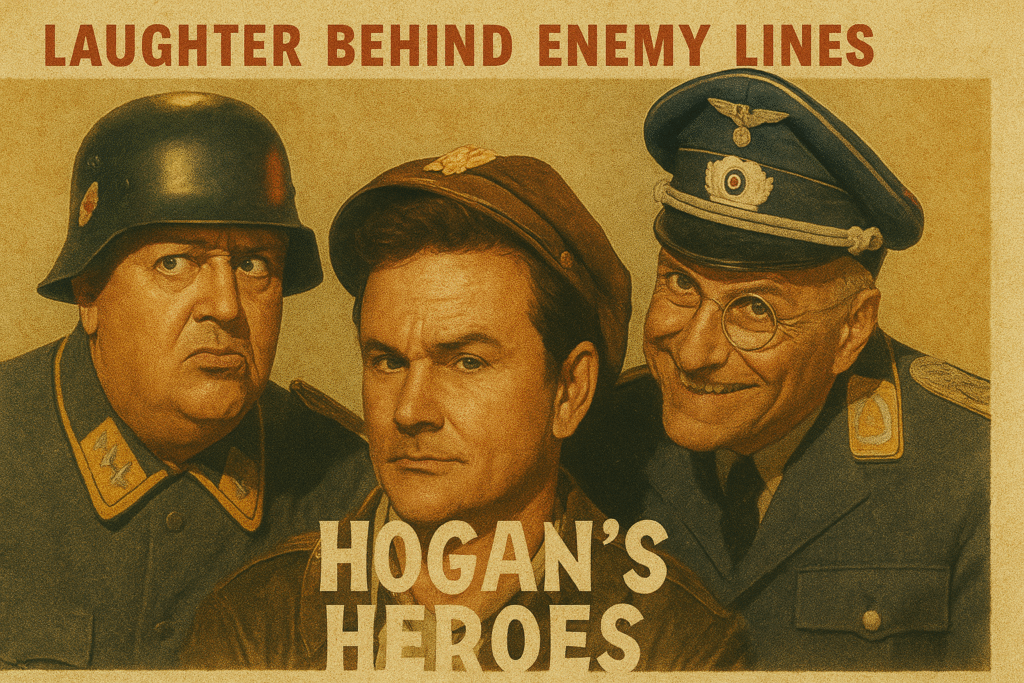
In the annals of classic American television, few shows are as unlikely—and unforgettable—as Hogan’s Heroes. Set in a German POW camp during World War II, the series somehow managed to blend slapstick comedy, espionage thrills, and clever satire, all while navigating one of history’s darkest chapters. Premiering on CBS in 1965 and running for six seasons until 1971, Hogan’s Heroes proved that even in the bleakest circumstances, laughter could be a powerful weapon.
Welcome to Stalag 13
At the heart of the show is Colonel Robert Hogan (played by Bob Crane), the smooth-talking, charismatic American officer held at the fictional Stalag 13. But unlike your typical prisoner of war story, Hogan and his fellow inmates aren’t plotting to escape—they’ve already turned the camp into the perfect cover for Allied sabotage missions. Using hidden tunnels, radios, and clever disguises, the prisoners conduct covert operations under the noses of their dimwitted captors.
The comedic twist? Their German jailers are more bumbling than brutal. Colonel Wilhelm Klink (Werner Klemperer), the monocle-wearing commandant, is obsessed with keeping his spotless record of no escapes—unknowingly aided by Hogan himself. Meanwhile, Sergeant Hans Schultz (John Banner), the lovable oaf who utters the iconic line “I know nothing!,” turns a blind eye to nearly everything.
Comedy with Context
When Hogan’s Heroes first aired, it raised eyebrows. Could a sitcom about a Nazi POW camp really work? But the show carefully navigated its premise by ensuring the villains were always the fools. The prisoners weren’t victims—they were the true masterminds, outwitting the enemy at every turn. The Nazis were never glorified; they were ridiculed, undermined, and made the punchline in nearly every episode.
Interestingly, many of the actors portraying Germans were themselves Jewish refugees from Europe, including Klemperer and Banner. Werner Klemperer only agreed to take the role of Klink on the condition that the Germans would never win. For these performers, mocking the regime that had terrorized their homelands was a powerful form of catharsis.
A Cast That Clicked
The ensemble cast of Hogan’s Heroes was a key to its success. Alongside Bob Crane’s confident Hogan were a team of international characters: Sergeant Kinchloe (Ivan Dixon), the radio operator and moral compass; Corporal LeBeau (Robert Clary), a Frenchman with culinary skills and nerves of steel; Corporal Newkirk (Richard Dawson), the cheeky Englishman with a knack for pickpocketing and impersonations; and Sergeant Carter (Larry Hovis), the eager explosives expert.
Each character had a distinct personality and role within the underground operation, creating a dynamic and entertaining group that felt more like a spy ring than a group of captives.
A Legacy That Lasts
While it ended in 1971, Hogan’s Heroes found a second life in syndication and has remained a favorite among fans of vintage television. Its theme song—brisk and martial—still instantly evokes the image of the Stalag 13 barracks, and its influence can be seen in later shows that blended military settings with humor (MASH*, for instance, owes more to Hogan’s Heroes than many realize).
The series also sparked interest in World War II history for many viewers, even if filtered through a comedic lens. It showed that resistance can come in many forms—sometimes, even with a wink and a punchline.
Though comedy trends have changed, Hogan’s Heroes remains a unique piece of television history: bold, bizarre, and beloved. Behind enemy lines, it turns out the best offense is a good laugh.